

Guts casino Plinko
Introduction
Plinko looks almost too simple to deserve a serious analysis. A ball drops from the top of a board, bounces through a field of pegs, and lands in a payout slot at the bottom. That is the whole visual idea. Yet on Guts casino, Plinko attracts attention for a reason: behind that stripped-down presentation sits a very specific style of gambling that feels different from both classic slots and top Guts Casino roulette.
I find that many players underestimate Plinko on first contact. The interface is clean, the rules are easy to grasp in seconds, and there are no reels, paylines, bonus rounds, or card decisions to learn. But that simplicity is deceptive. The real experience depends heavily on settings such as risk level, number of rows, and stake size. Those variables change not just the possible payout range, but the rhythm of the session, the emotional tension of each drop, and the way bankroll swings feel in practice.
This is why a proper Guts casino Plinko review should focus on the game itself, not on generic casino talking points. The key question is not whether Plinko is trendy or visually familiar. The real question is what this format actually offers to a player, how its mechanics work under the surface, and whether its style matches the way you prefer to gamble.
In this article, I will break down how Plinko works, why it has become so noticeable in online gambling, what its strengths and limitations are, and what you should understand before launching a session on Guts casino.
What Plinko is and why players keep coming back to it
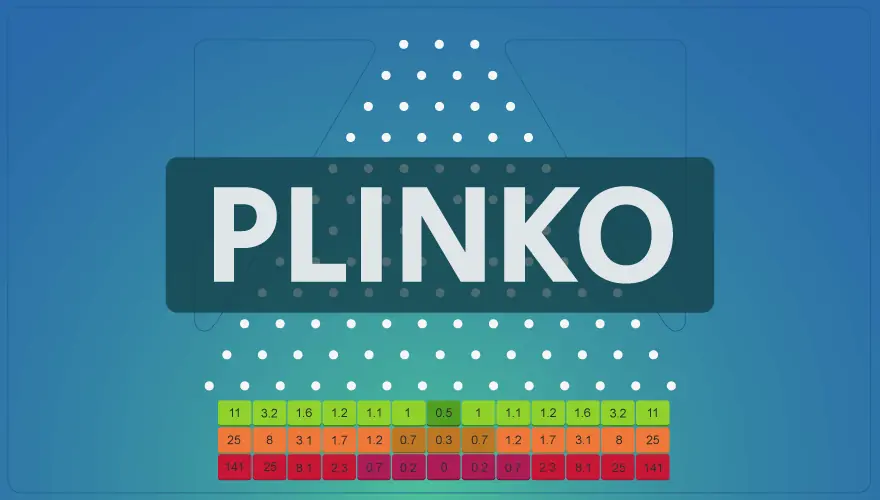
Plinko is a chance-based casino game built around a vertical board filled with pins. The ball starts at the top, collides with pegs on the way down, and eventually lands in one of several multiplier slots. Your return depends on where it finishes. The concept is easy to read instantly, which is one of the biggest reasons for its appeal.
Unlike many online slots, Plinko does not ask the player to decode symbols, bonus triggers, scatter rules, cluster systems, or expanding feature sets. You choose a stake, select the board settings, drop the ball, and watch the outcome unfold in a few seconds. That directness gives the game a low barrier to entry. Even a first-time player can understand the basic flow almost immediately.
But Plinko became noticeable for another reason: it compresses suspense into a very short cycle. In a slot, anticipation often builds through spinning reels and feature teases. In Plinko, the tension comes from the visible path of the ball. Every bounce creates a small illusion of possibility. You can see the ball drifting toward a high multiplier, then suddenly ricocheting back toward a modest result. That visual movement matters more than it may seem at first glance.
One thing I have noticed across different Plinko versions is that the game feels more “honest” to many players than a slot, even though both rely on random number generation. The reason is psychological, not mathematical. In Plinko, randomness is displayed as motion. You are not just shown an outcome; you watch the route that appears to produce it. That makes the process feel transparent, even if the result is still governed by probability.
On Guts casino, this format can appeal to players who want fast rounds, clear inputs, and a gambling session that does not depend on long feature droughts. At the same time, that same speed can become a problem for anyone who mistakes visual simplicity for low intensity.
How the Plinko mechanics actually work
At the core of Plinko is a random pathing system. The ball is released from a starting point at the top of the board and falls through rows of pegs. At each peg collision, it shifts left or right until it reaches the bottom. The final slot determines the multiplier applied to the stake.
In practical terms, most Plinko versions are built around three main controls:
Bet size — how much you stake on each drop.
Risk level — usually low, medium, or high, which reshapes the payout distribution.
Rows — the depth of the board, which affects the range and structure of possible outcomes.
These settings matter because Plinko is not just one game mode. It is closer to a framework that can behave very differently depending on configuration. A low-risk board with fewer rows may produce many small returns and a steadier session. A high-risk board with more rows can create long stretches of weak landings punctuated by rare but very large multipliers.
The movement itself appears physical, but the important thing for the player is not to overread the animation. The bounce pattern is there to visualize randomness, not to invite prediction. You are not spotting a trend, reading momentum, or learning a board bias. Each drop is effectively its own random event. That is essential to understand before real money is involved.
| Setting | What it changes | What it means in practice |
|---|---|---|
| Bet size | Monetary value of each drop | Directly affects bankroll pressure and emotional intensity |
| Risk level | Payout distribution across the board | Changes whether results feel steadier or more extreme |
| Rows | Board depth and multiplier spread | Usually increases variance potential as the board expands |
A useful way to think about Plinko is this: the board is not a puzzle to solve, but a volatility map you choose before the session starts. Many players focus only on the top multiplier, but the more important question is how often the lower and middle slots are likely to appear relative to that headline number.
Why the game feels fast, tense, and sometimes misleadingly simple
Plinko has one of the quickest feedback loops in online gambling. You place a stake, watch a short drop, and see the result almost instantly. That fast cycle is a major part of the game’s appeal. There is very little dead time, and the visual action is enough to make even a small stake feel active.
On Guts casino, this can create a session style that feels smooth at first and surprisingly intense after ten or fifteen minutes. The reason is not just pace. It is the combination of speed and near-miss psychology. A ball drifting close to a strong multiplier before bouncing away can create the same emotional pull that players know from slot bonus teases, but in a more visible and immediate form.
This is one of the most memorable things about Plinko: it often feels as if you were “almost there,” even though each route is only a random path to a final slot. That sensation can encourage repeated drops faster than a player initially expects. In other words, the interface looks calm, but the session can become high-tempo very quickly.
Another observation worth making is that Plinko compresses disappointment and hope into the same few seconds. A weak result lands quickly, but so does the temptation to try again. There is no long spin animation to slow you down and no elaborate feature sequence to break the flow. For some players, that is exactly the attraction. For others, it is the point where discipline becomes harder.
Understanding risk levels, probabilities, and session behaviour
If there is one area where players should slow down before starting Plinko, it is the relationship between risk level and expected session behaviour. The game may look like a casual drop-and-watch format, but the chosen risk profile changes the experience dramatically.
At a low-risk setting, the board is usually structured to return more frequent modest multipliers. This does not mean safe profit, and it certainly does not remove randomness, but it often produces a more stable balance curve. You may see many outcomes close to break-even or slightly below and above it, which can make the session feel less violent.
At a high-risk setting, the distribution becomes far harsher. The attractive top multiplier is usually balanced by a much greater chance of landing in low-value slots. In real play, this often means long stretches of disappointing results with occasional spikes. Those spikes are what sell the dream of Plinko, but they should not be mistaken for a reliable pattern.
That is the central practical truth of the game: Plinko is easy to understand visually, but the payout profile can be severe. A board offering a large multiplier is not “better” by default. It is simply more demanding on bankroll tolerance and emotional patience.
Players should also remember that probability in Plinko is not evenly distributed across the board. The central slots are typically more likely than the extreme edges because there are more possible paths leading toward the middle. The highest multipliers often sit at the far ends, which is exactly why they are rare. This is not a hidden trick. It is part of the game’s structure.
| Risk profile | Typical session feel | Best suited for |
|---|---|---|
| Low | More frequent modest returns, softer swings | Players who value steadier pacing |
| Medium | Balanced mix of routine outcomes and occasional stronger hits | Players testing the format without going extreme |
| High | Dry spells, sharper bankroll movement, rare standout landings | Players comfortable with aggressive variance |
One important practical conclusion follows from this: if your usual habit is to increase stake size after several weak results, Plinko can punish that behaviour quickly. The game does not “owe” a strong landing after a bad run. Each drop remains independent, no matter how dramatic the previous sequence looked.
What a player should know about rhythm, expectation, and real outcomes
Plinko rewards the right expectations and punishes the wrong ones. The right expectation is that you are choosing a style of randomness, not controlling an outcome. The wrong expectation is that a certain board setup will somehow become readable after enough drops.
In a real session, rhythm matters almost as much as mathematics. Because rounds are short, bankroll can move faster than in many traditional casino games. A player using auto-play or rapid manual drops may get through a large number of bets in a short window. That makes stake discipline more important than the clean interface suggests.
I would highlight three practical points before playing:
Set the session style first. Decide whether you want low-risk continuity or high-risk chasing before the first drop. Switching impulsively during a losing stretch usually makes the session worse, not better.
Treat top multipliers as rare events. They are part of the appeal, but they should not be your baseline expectation.
Watch speed as carefully as stake size. In Plinko, fast repetition can drain a balance quietly, especially when the board looks harmless.
A memorable feature of Plinko is that it can produce two very different player experiences from almost the same screen. One player uses a low-risk setup and sees a controlled, repetitive flow. Another chooses a high-risk board and gets a much sharper, more volatile ride. The interface barely changes, but the session psychology changes a lot.
That contrast is one of the reasons the game stands out. It looks minimal, yet it can behave like two different products depending on how it is configured.
How Plinko differs from slots and other casino games
The easiest comparison is with online slots, because that is where many players arrive from. Both Plinko and slots are chance-driven and can be played quickly, but the structure of engagement is very different.
Slots are layered products. They rely on symbol combinations, reel sets, bonus rounds, complete Guts Casino free spins guide for safer real money play, modifiers, and themed presentation. The entertainment value often comes from variety, audiovisual build-up, and the possibility of entering a feature sequence that changes the pace of play.
Plinko strips almost all of that away. There are no narrative layers, no reel math to interpret, and usually no separate bonus stage. The entire appeal sits in the drop itself and in the board settings you choose. That makes the game more transparent in one sense and more exposed in another. There is less decoration between the player and the underlying variance.
Compared with roulette, Plinko shares the appeal of quick independent rounds, but the visual experience is more animated and path-based. Compared with blackjack, it removes decision-making almost entirely. Compared with crash games page for active Guts Casino players, it offers a similar tension around risk appetite, but without the player-controlled cash-out moment.
So where does Guts casino Plinko really sit in the wider casino mix? I would place it between slots and instant-win formats. It has the visual suspense of a mini-event, but the structural simplicity of a rapid betting game. That hybrid identity is a big part of its appeal.
Practical strengths and weak points of Plinko
The strongest side of Plinko is clarity. You can understand the setup quickly, adjust the board to match your comfort level, and start playing without learning a complicated rule set. For players who are tired of overloaded slot interfaces, this directness is refreshing.
Another strength is session control at the setup level. Risk mode and rows give the player a meaningful way to shape the overall feel of the game. You are not controlling outcomes, but you are choosing the kind of distribution you want to face. That is a more useful form of input than many casual players get in standard slots.
Plinko also delivers strong visual suspense without needing elaborate design. A single bouncing ball can create more immediate tension than a full reel spin, because the route appears to develop in real time. This is one of the game’s smartest design advantages.
Still, the format has limitations. The biggest one is repetition. If you need theme progression, bonus variety, or changing feature layers, Plinko can feel narrow after a while. It is intentionally minimalist, and that minimalism will not suit everyone.
Another weak point is the risk of underestimating bankroll drain. Because the interface is clean and rounds are short, some players treat it like a light side activity. In reality, a high-risk setup can be harsher than many expect. The game does not need flashy animations to produce serious swings.
There is also a subtle issue with perception. Plinko can make randomness look almost skill-adjacent because you watch the ball travel through the board. For some players, that creates a false sense of pattern recognition. It is important to resist that illusion. The visible path is engaging, but it is not a prediction tool.
Who Plinko suits best and who may prefer another format
Plinko is well suited to players who value short rounds, simple controls, and a direct connection between stake and outcome. It also fits those who enjoy adjusting risk profiles and seeing how a session changes when the payout distribution changes. If you like gambling formats that get to the point quickly, this style can be very effective.
It may also suit players who want a break from traditional slots without moving into rule-heavy table games. In that sense, Guts casino Plinko can work as a middle ground: easier to parse than blackjack, more dynamic than a static instant-win card reveal, and less cluttered than a feature-packed slot.
On the other hand, it may not suit players who need strategic decision-making during each round. Once the drop begins, your role is basically over. It also may not satisfy players who want long-form entertainment from bonus rounds, story themes, or evolving gameplay layers.
And for anyone who is highly sensitive to rapid bankroll movement, caution is necessary. Plinko can feel light, but it is not automatically gentle. Especially on aggressive settings, the session can turn into a sequence of quick disappointments interrupted by occasional standout returns. Some players enjoy that pressure. Others will find it draining rather than fun.
What to check before launching Plinko on Guts casino
Before starting a Plinko session, I recommend focusing on a few practical checks rather than rushing into the first drop.
Review the risk setting carefully. This is the single biggest factor shaping your experience.
Check the row configuration. A deeper board often means a wider spread of outcomes and stronger extremes.
Use a modest initial stake. This helps you feel the pace of the board before committing more.
Consider demo play if available. It is useful not because it predicts future results, but because it shows how a chosen setup behaves over time.
Decide your stop point in advance. Plinko’s speed makes this more important than many players assume.
A final observation here: Plinko is one of those games where the settings screen matters almost as much as the play screen. Many players spend more time watching the ball than thinking about the board they built. In practice, the opposite approach is smarter. The setup defines the character of the session.
Final verdict
Guts casino Plinko offers a very specific kind of gambling experience: fast, visually clear, and heavily shaped by the player’s chosen risk profile. Its greatest strength is that it makes randomness easy to engage with. You do not need to learn complex rules, wait for bonus rounds, or decode slot systems. You choose the board, drop the ball, and see the result unfold in seconds.
That simplicity, however, should not be confused with softness. Plinko can be calm or severe depending on how it is configured. Low-risk settings may support a more measured session, while high-risk boards can produce sharp swings and long stretches of weak results. The game’s clean presentation hides a payout structure that can be much tougher than new players expect.
For the right player, that is exactly the point. If you enjoy quick rounds, visible outcome paths, and a format where the tension comes from distribution rather than from features, Plinko is worth trying. If you prefer strategic input, slower pacing, or richer game variety, another format may suit you better.
My overall view is straightforward: Plinko is not just a simple side game. At its best, it is a compact volatility engine with a deceptively minimal face. Its strengths are clarity, pace, and adjustable session style. Its weak points are repetition, speed-driven bankroll pressure, and the false impression that visible motion makes the outcome readable. Go into it with realistic expectations, and you will understand very quickly whether this format fits your style.
FAQ
What happens when a ball drops in Plinko on the Guts online casino site?
The ball falls through the board and bounces off pegs, then lands in one of the prize zones. The multiplier for that zone determines the result of the round.
How does Plinko risk level work, and why do outcomes feel different round to round?
Plinko results are driven by the ball’s physics simulation and the distribution set for each game mode. Higher risk settings can offer larger multipliers, but the hit rate for big wins may be lower.
How should the bet be set before starting a Plinko round?
Choose the stake using the on-screen controls, then confirm the bet for the next ball drop. Some modes may also allow selecting the number of rounds or a session layout, so checking the selected setup matters.
Why do multipliers appear on the board during play, and when are they counted?
Multipliers represent the payout potential of the zone where the ball lands. The multiplier is applied when the ball finishes its path and the final slot is revealed.
What should be checked before pressing the start button if a bonus offer is active?
Confirm the active mode and bet amount, especially if a promo area applies to selected spins or deposits. It’s also important to review any conditions shown for the offer before starting the first ball drop.